St Oswald’s Church · Conservation · 2026
St Oswald’s Church · Conservation · 2026
In January 2026 one of St Oswald’s oldest treasures was given the care it needed for the centuries ahead: a small but remarkable panel of fourteenth-century stained glass, and one of the few survivals in the village from the medieval period.
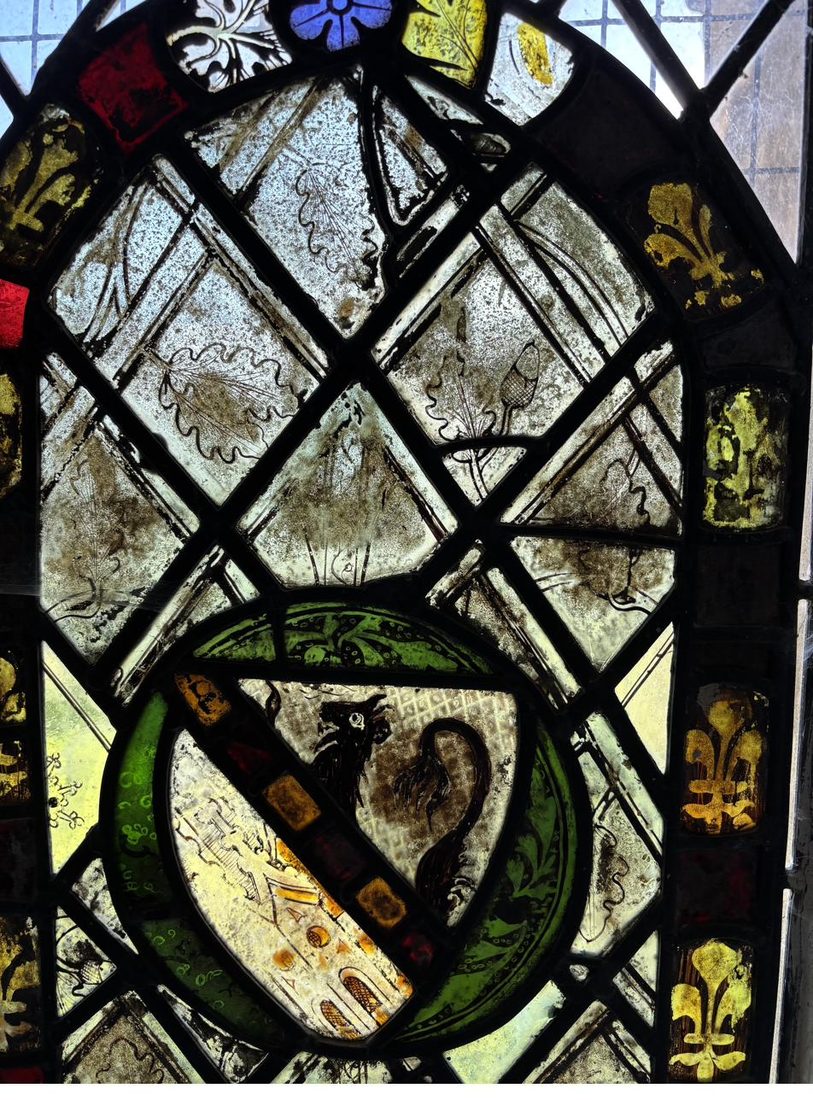
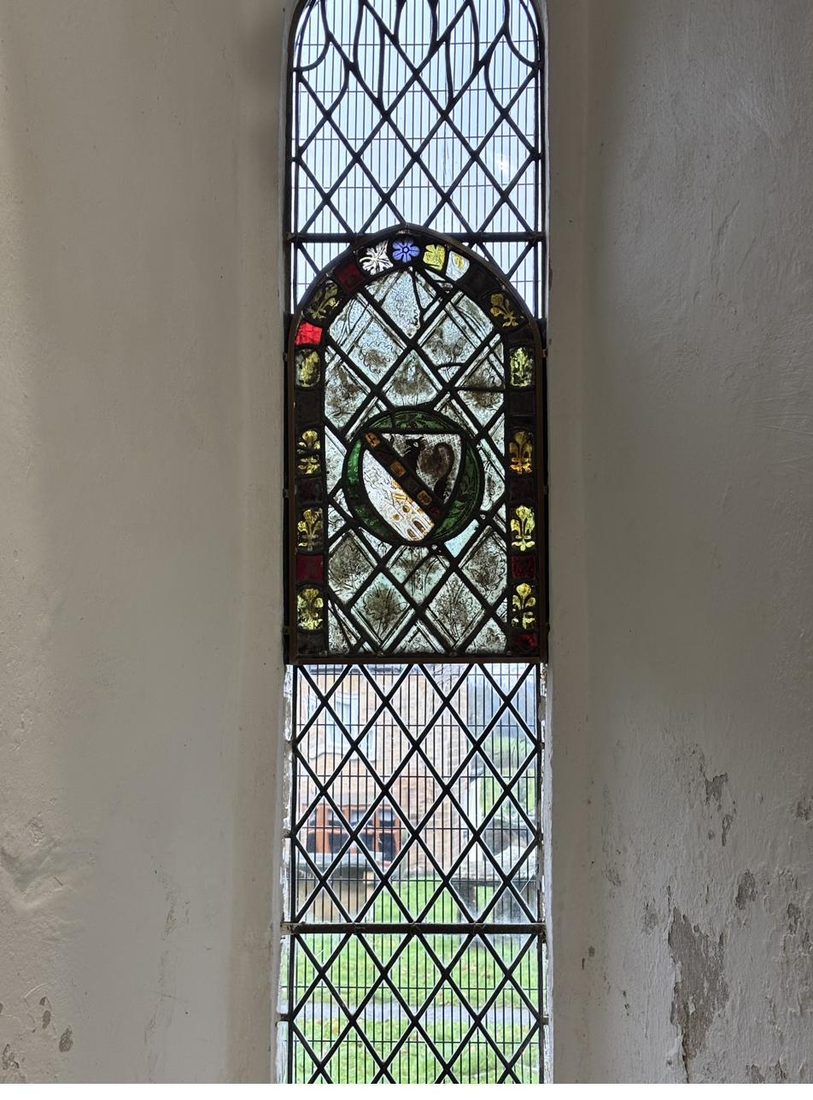
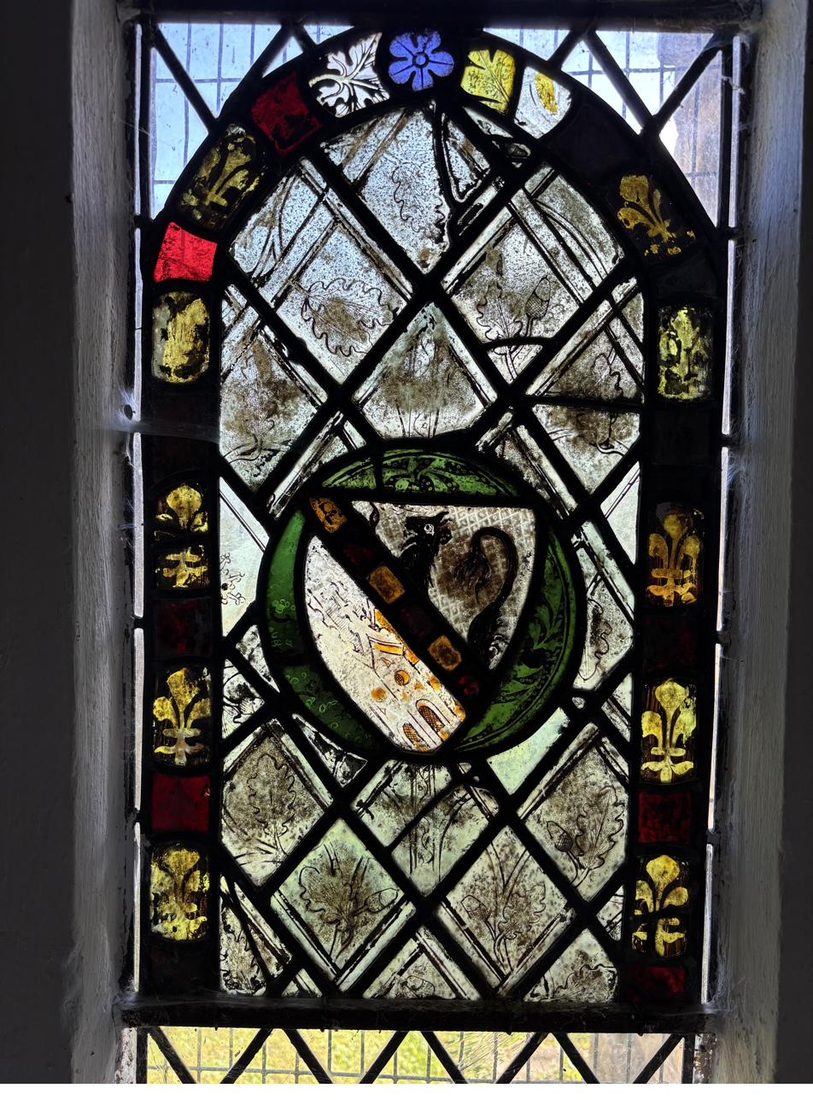
The panel dates largely from the fourteenth century. At its centre sits a partial heraldic lion painted in black, set within a green roundel and surrounded by oak-leaf quarries. A decorative border of fleur-de-lis motifs, enhanced with silver stain, frames the composition.
Over the centuries the panel has undergone repairs and alterations, with later pieces of glass inserted to stabilise and complete the design. These “stopgaps” — though from varying periods — tell their own story of care and adaptation across generations, and are now part of the window’s history in their own right.
The panel came to attention in the most recent quinquennial inspection, the five-yearly survey every church building undergoes. Among the various repairs it identified was the need to conserve one of the church’s historic stained glass panels — a small but remarkable survival from the medieval period.
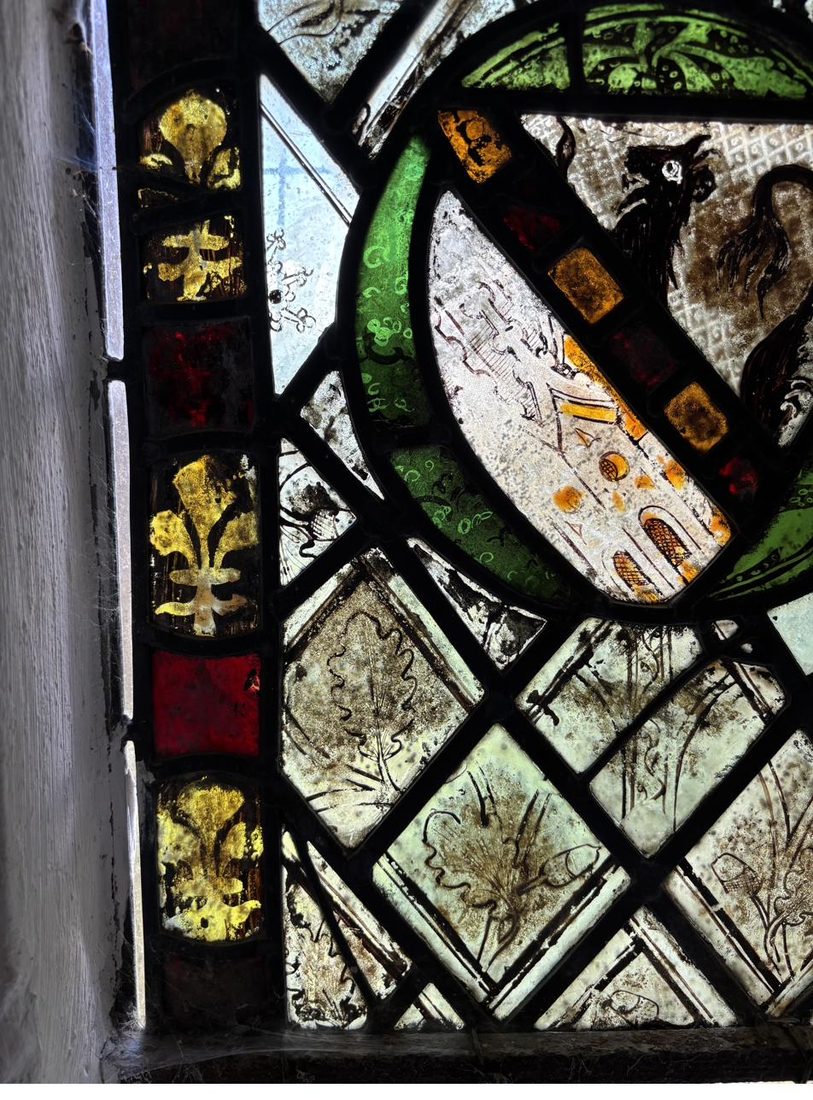
Time and exposure had taken their toll. The external surface of the medieval glass showed significant pitting — a form of corrosion caused by centuries of weathering. The process gradually weakens glass, leaching out minerals and leaving it vulnerable to further deterioration. Dirt lodged within these tiny pits had also begun to obscure the original painted detail.
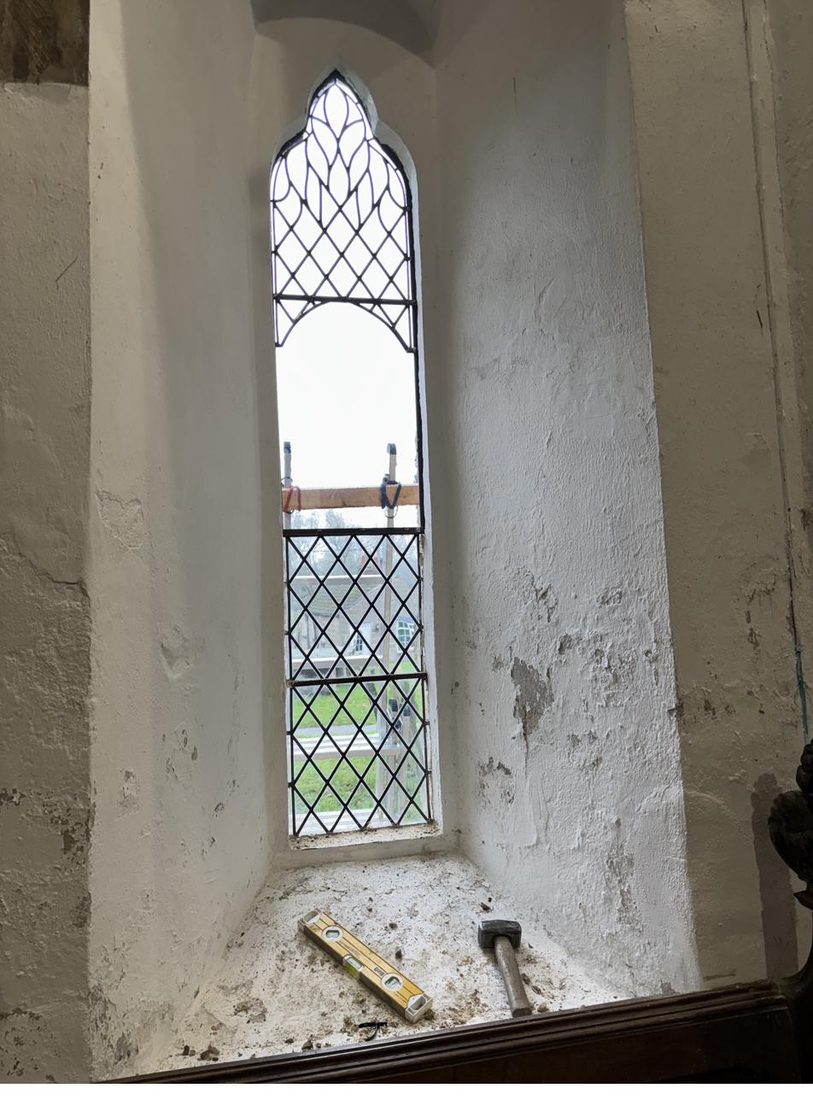
The supporting leadwork and metal fixings were showing signs of age and corrosion, and the existing protective measures were no longer fit for purpose. The outer protective grill had rusted.
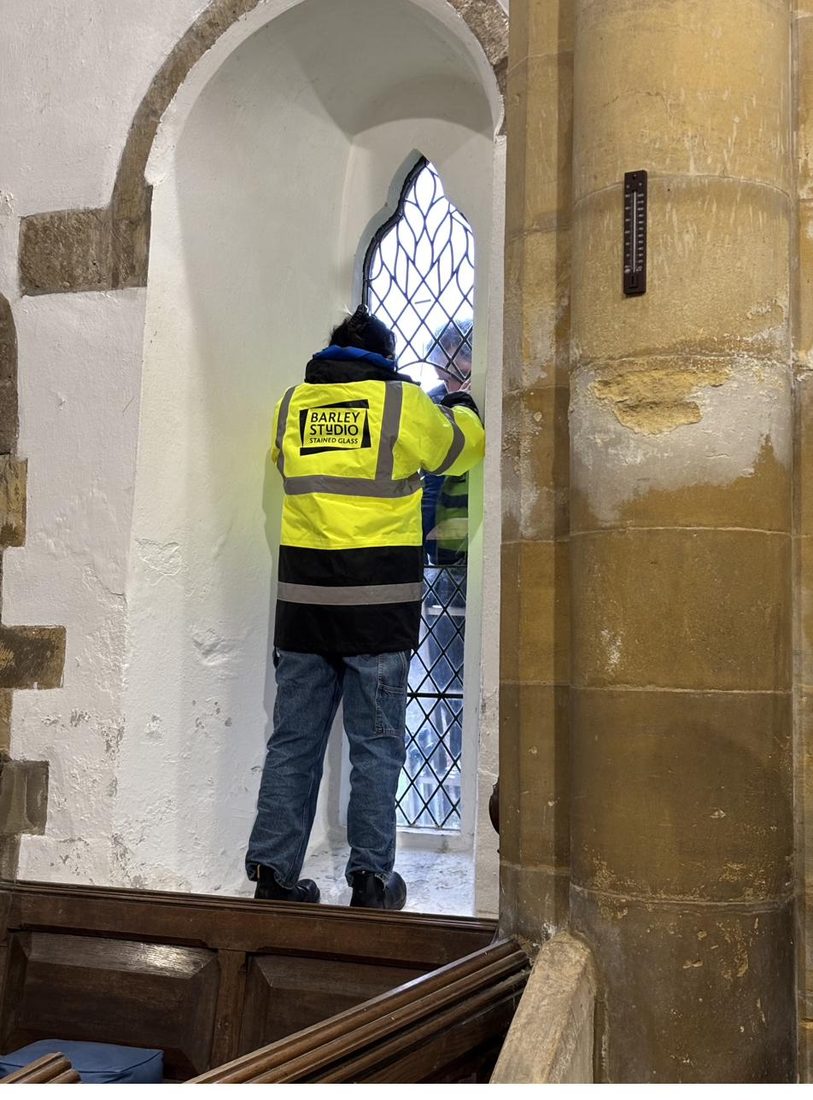
Specialist conservators from Barley Studio, of York, were commissioned to undertake the work. Their approach balanced careful preservation with modern protection techniques.
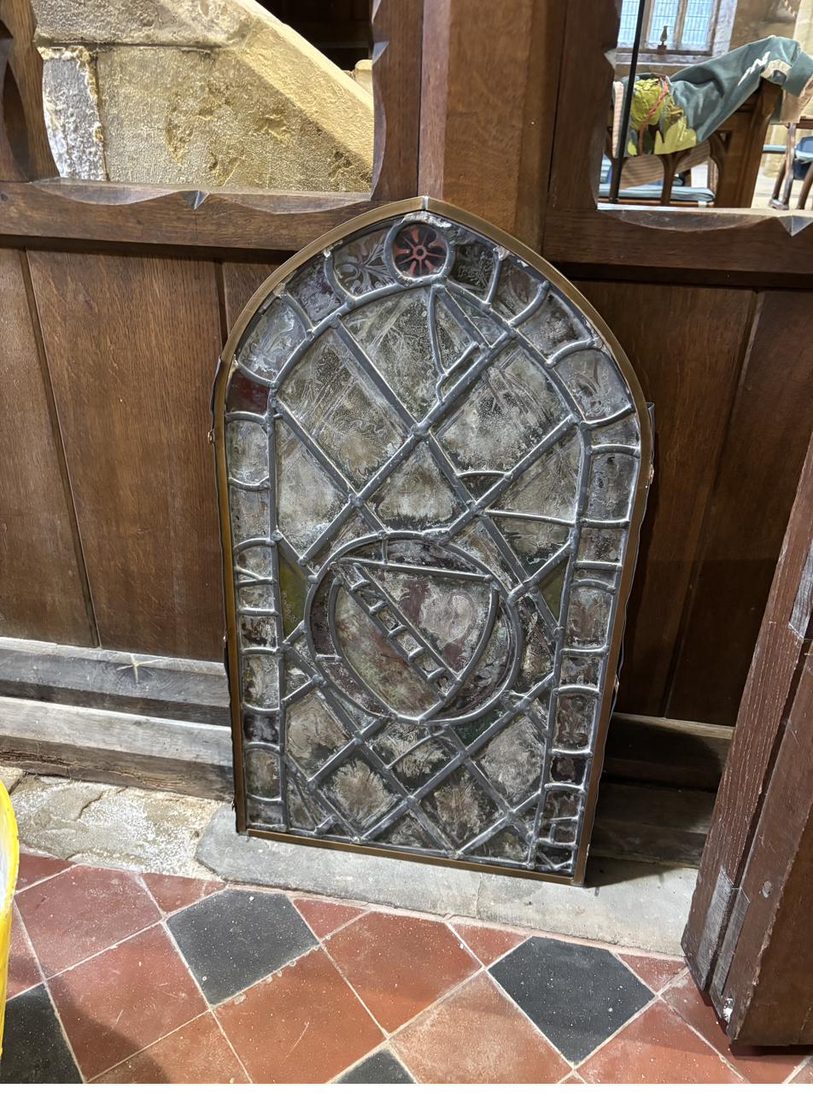
Importantly, only minimal cleaning and conserving work was done to the window itself. The panel was temporarily removed and taken to the studio, where it was gently cleaned and conserved, then secured within a supportive manganese bronze frame to provide long-term stability.
The main work was protective. A new panel of clear glass was fitted where the medieval panel had previously sat, and the historic panel was then reinstated inside the outer pane — but standing slightly proud of it.
Environmental Protective Glazing
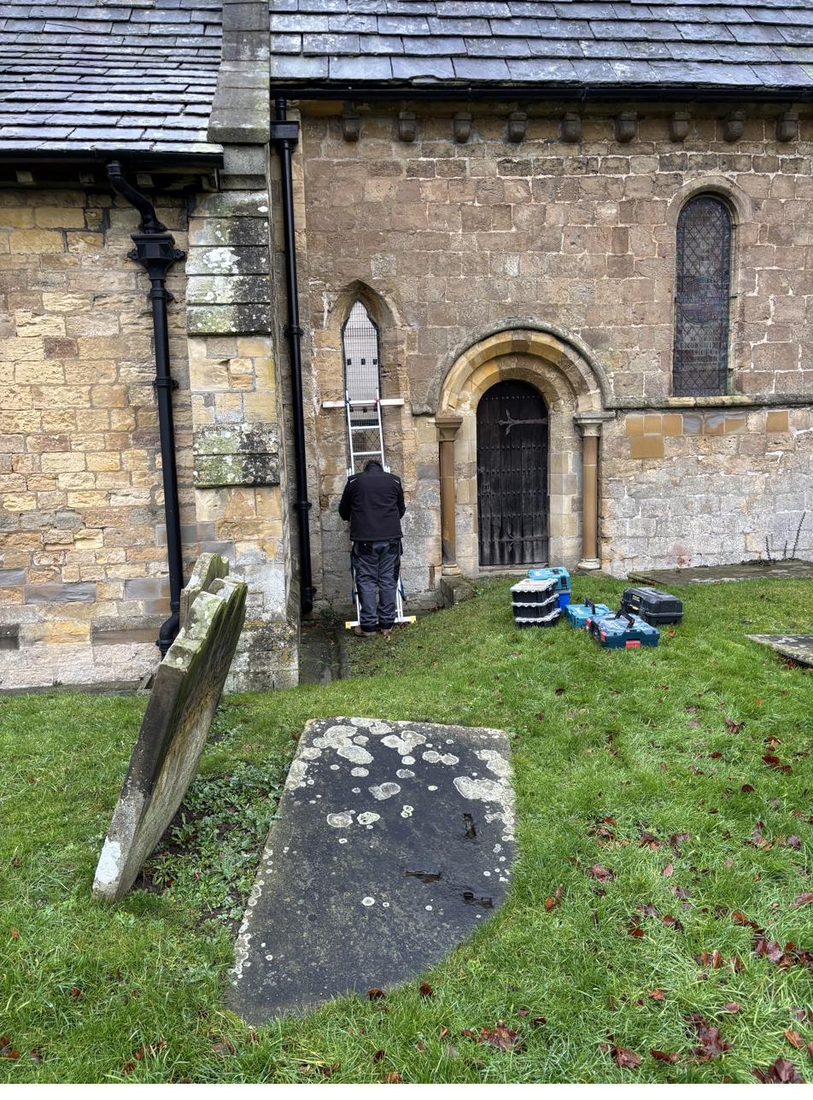
This is the now-standard system, used at York Minster and elsewhere. The outer pane shields the fragile medieval glass from direct exposure to the elements — acid rain and weathering — while the gap behind it allows air to circulate, so that damaging condensation cannot form on the historic glass. The rusted outer grill was replaced with a new one, and the conserved panel reinstalled: safely protected, but still fully visible in its original setting.
The result preserves the physical integrity of the glass, but also ensures that its artistry and historical significance continue to be enjoyed for generations to come.
The installation · January 2026
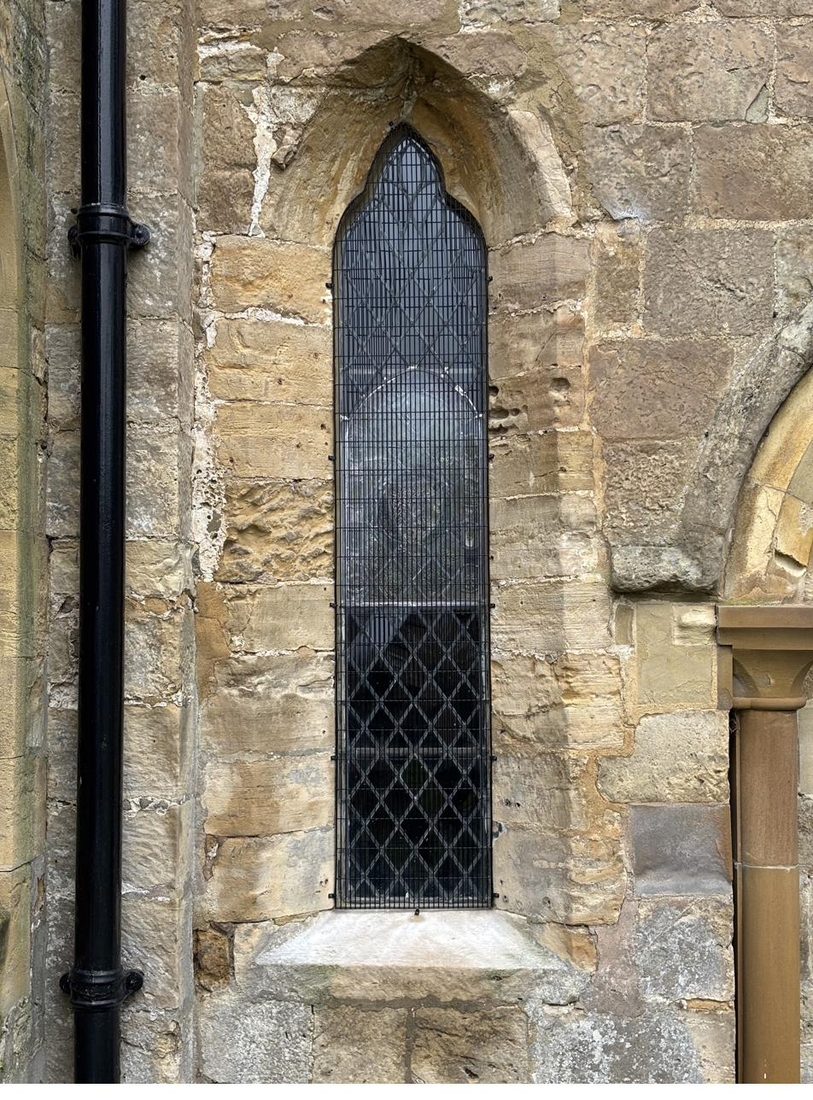
Photographs · Jonathan Wilkinson
Particular thanks must go to Jonathan Wilkinson, who, on behalf of the PCC, managed the project and oversaw the process from start to finish. His efforts in identifying the right specialists and guiding the work through to completion were invaluable.
As you look at the accompanying before-and-after photographs, we hope you will share in a renewed appreciation for this small but significant piece of our church’s heritage — a reminder of the craftsmanship, faith, and continuity that define St Oswald’s Church in Farnham.
Conservation by Barley Studio, York. An account of the restoration by Stacey Adams appeared in The Link, July–August 2026. Photographs courtesy of Jonathan Wilkinson.