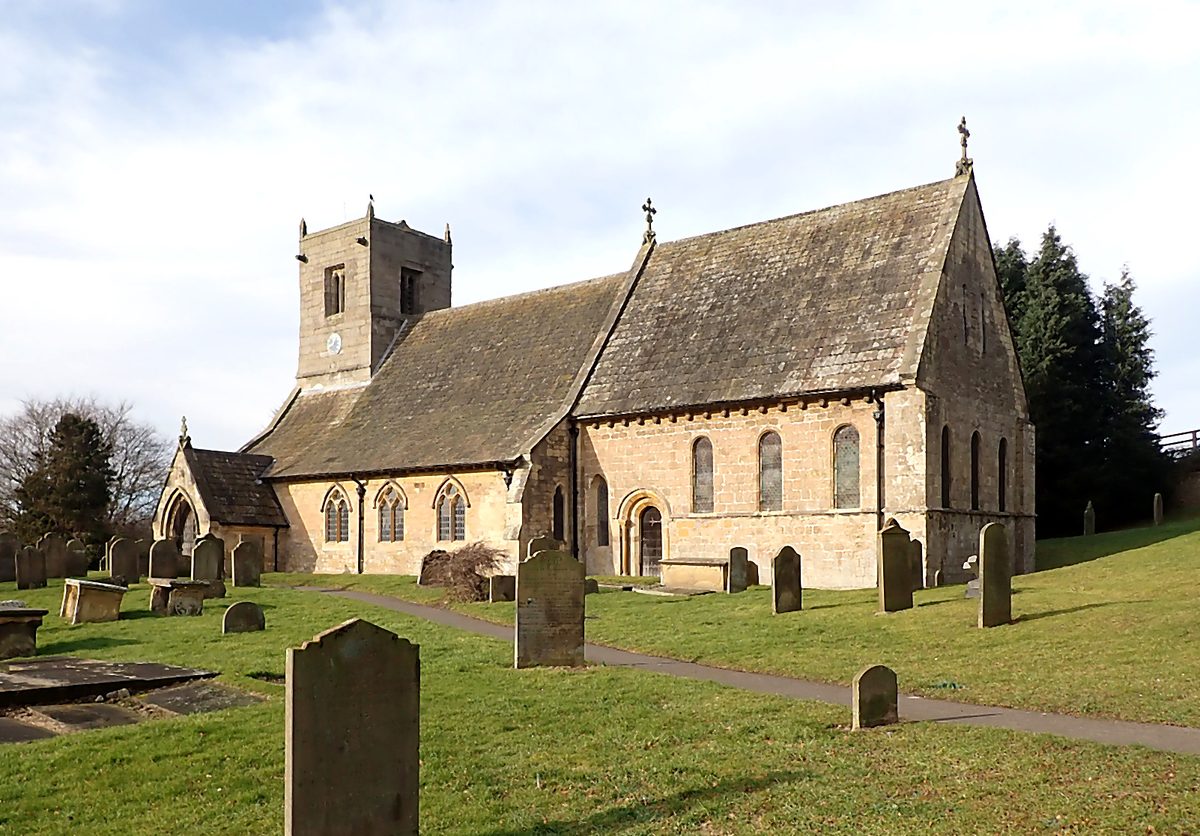
The Domesday church of 1086 has not survived; the building you see today is a layered structure of Norman, Early English, Decorated and Perpendicular work, restored once thoroughly in the Victorian age and gently again at the millennium. The clearest description of its phases is the one set down by the Durham architect C. Hodgson Fowler (1840–1910), one of the most respected English church architects of his generation. He surveyed Farnham as part of his diocesan work and wrote:
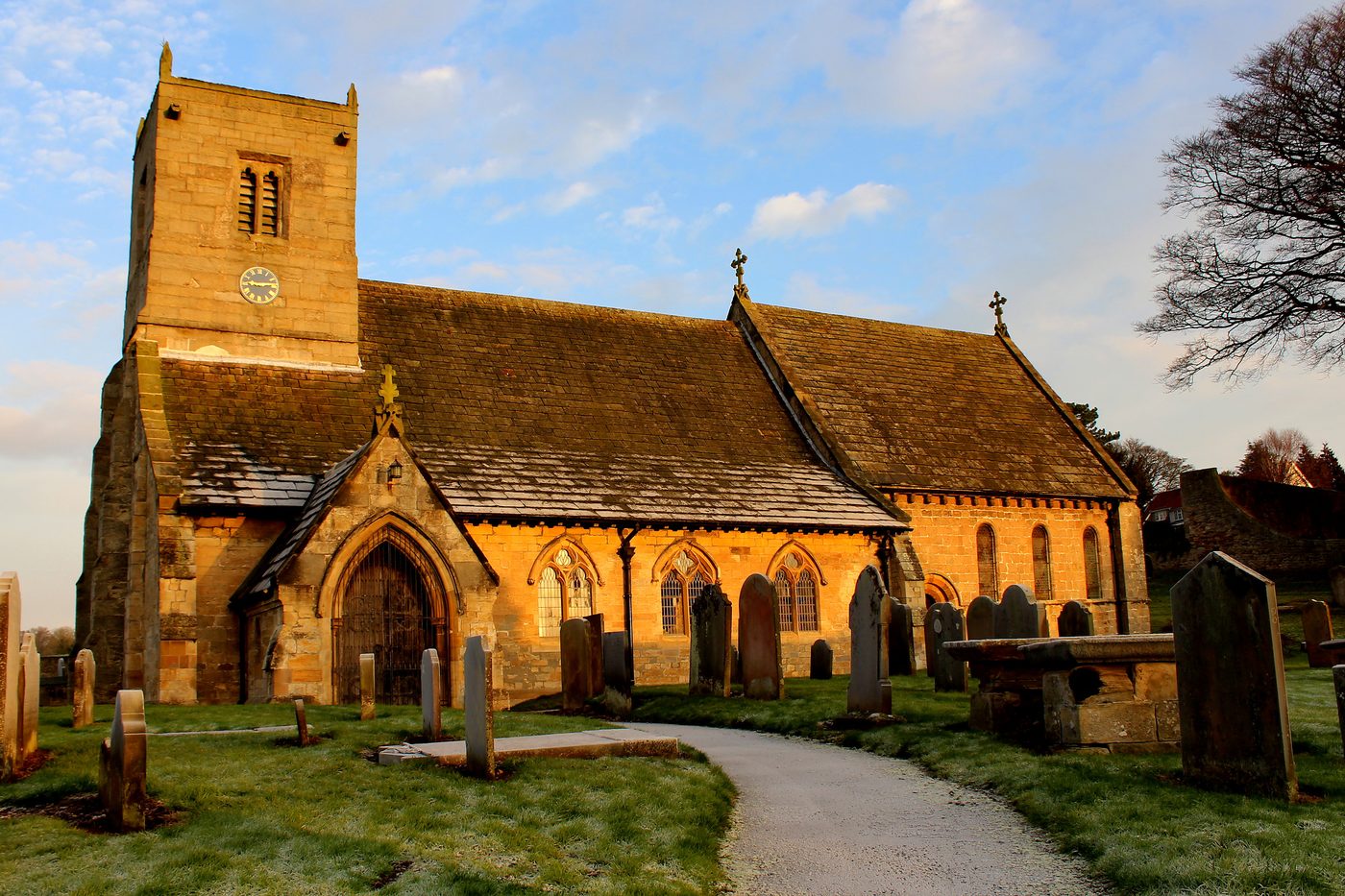
The chancel is remarkable for its size and dignity; it was built on an unusual scale for so small a church. Its date appears to be about 1180. It is thought that an earlier Norman nave existed at this time but, if so, all trace has been lost. Three bays of the present north aisle were erected about the year 1200 and the south aisle of three bays was added some hundred years later. The south aisle has a peculiar treatment of the junction of arch and pier. About 1330 the south aisle was extended westward by the present, late Decorated arch, but the north aisle does not appear to have been lengthened until about 1480, this arch on the north side being Perpendicular in character. The present low tower (about 1500) was built inside the west end of the nave, its piers being placed inside the nave but not touching its walls.
C. Hodgson Fowler · architectural notes
Fowler’s account places the heart of the building in the late twelfth century. Pevsner, writing later, called the chancel “beautiful” — high praise from a critic not given to enthusiasm. The shafted capitals and corbel tables that survive show the late Norman, almost Cistercian sensibility of c. 1180.
Guy Fawkes and St Oswald’s.
One of the most celebrated villains in English history had a direct family connection to this church. When Edward Fawkes died in York in 1578, his widow Edith remarried Denis Bainbridge of Scotton, the next village downriver, and the young Guy Fawkes spent his formative years living in Scotton with his mother and stepfather. Guy’s two sisters, Anne and Elizabeth Fawkes, were both married in St Oswald’s; his stepfather Denis was buried in the churchyard. The Bainbridge–Fawkes family, like the Bickerdikes of Low Hall, belonged to the great body of recusant Yorkshire Catholic gentry who paid steadily, and sometimes dearly, for refusing to abandon the old faith.
It is not certain to what extent the local landscape shaped the man who set the Gunpowder Plot in motion in 1605, but the registers of the church record his stepfather’s burial and his sisters’ weddings, and the parish was familiar ground to him during the years when his religious convictions hardened.
Beauvale, the Dissolution and the long parish
In 1344 the advowson of the church was granted — by Sir William Malbis and others — to Beauvale Priory in Nottinghamshire, a Carthusian house founded the year before, in 1343 — an unusually pure and austere monastic order whose monks lived as solitary hermits within a shared enclosure. The priory drew the rectorial income from Farnham for almost two centuries until Beauvale was suppressed in Henry VIII’s Dissolution of the Monasteries in 1539, when the rectorial rights passed into lay hands.
George Gilbert Scott and the Victorian restoration
In 1768 the minister and churchwardens petitioned to have repairs done because the building was in a “ruinous” condition. Some patching was carried out, but it was not until the middle of the nineteenth century that a comprehensive restoration was undertaken. In 1854 the work was entrusted to Sir George Gilbert Scott (1811–1878), the most prolific church architect of the Victorian age and the man behind St Pancras Station, the Albert Memorial, and over a thousand churches. Scott rebuilt the south wall and porch, reroofed the nave and renewed its windows in the careful Gothic Revival manner of his prime years. Remarkably, the entire cost was met not by public subscription but by the vicar himself, the Rev. Thomas Collins, whose family had been patrons of the church since 1740.
The Rev. Anthony Waterer recorded, in 1956, a conversation he had had two years earlier with a Mrs Bruce of Throstle Nest farmhouse, whose mother-in-law had been ten years old in 1854 and had remembered the day of the re-opening clearly. The girl — Isabella Robinson, of Farnham House — described “horses and carriages all over the green and country gentlemen from all around, and many went, after the opening, to the Crown Inn opposite.” Isabella later married John Thomas Pullan, the schoolmaster, and then on his death married Pearson Bruce; she died in 1922 aged seventy-eight, still living at Throstle Nest.
The millennium and the village clock
To celebrate the millennium, in 2000–01 the parish embarked on an extensive programme of internal works: a new York-stone floor, kitchen and toilet facilities, new inner doors, and the installation of the village clock, which now sits on the south face of the tower — a present from the village to its church.
Bells, registers and the wider parish
The three bells in the tower are dated 1611, 1631 and 1774 — though Bridger's 1996 study of the village records the earlier pair as both being cast in 1633, suggesting a small disagreement in the records well worth resolving. The 1774 bell carries the inscription “Peake and Chapman, London · Rev. Thos. Collins Vicar · J. Wood Churchwarden 1774”, naming the centenarian John Wood (buried 1787, aged 103) who served as churchwarden for many years.
The parish registers begin in 1569, in the eleventh year of Elizabeth I, and run virtually unbroken to the present — a remarkable continuous record of christenings, marriages and burials over 450 years. The most accessible edition is the transcription by Dr. Francis Collins, Registers of Farnham 1569–1812. Today St Oswald’s forms part of the modern parish of Walkingham Hill, grouped with five sister churches in the surrounding villages.