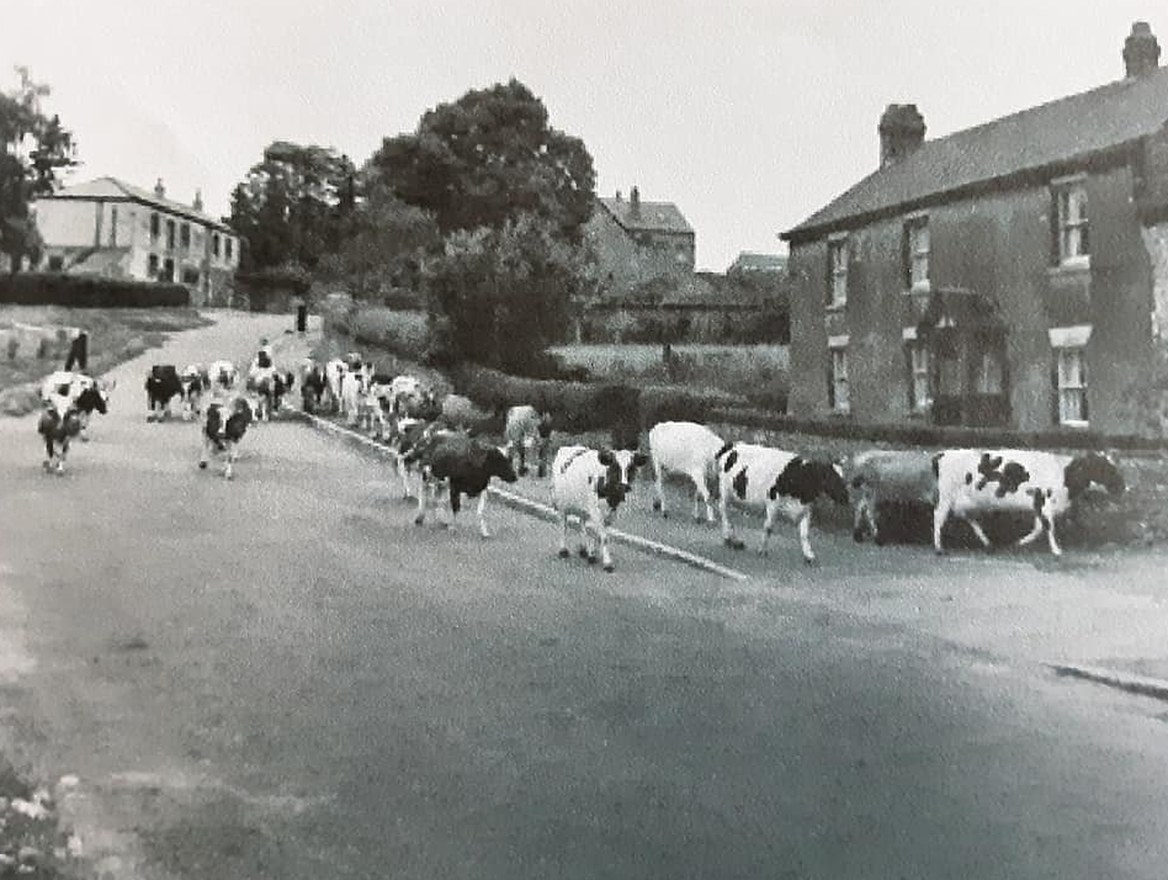
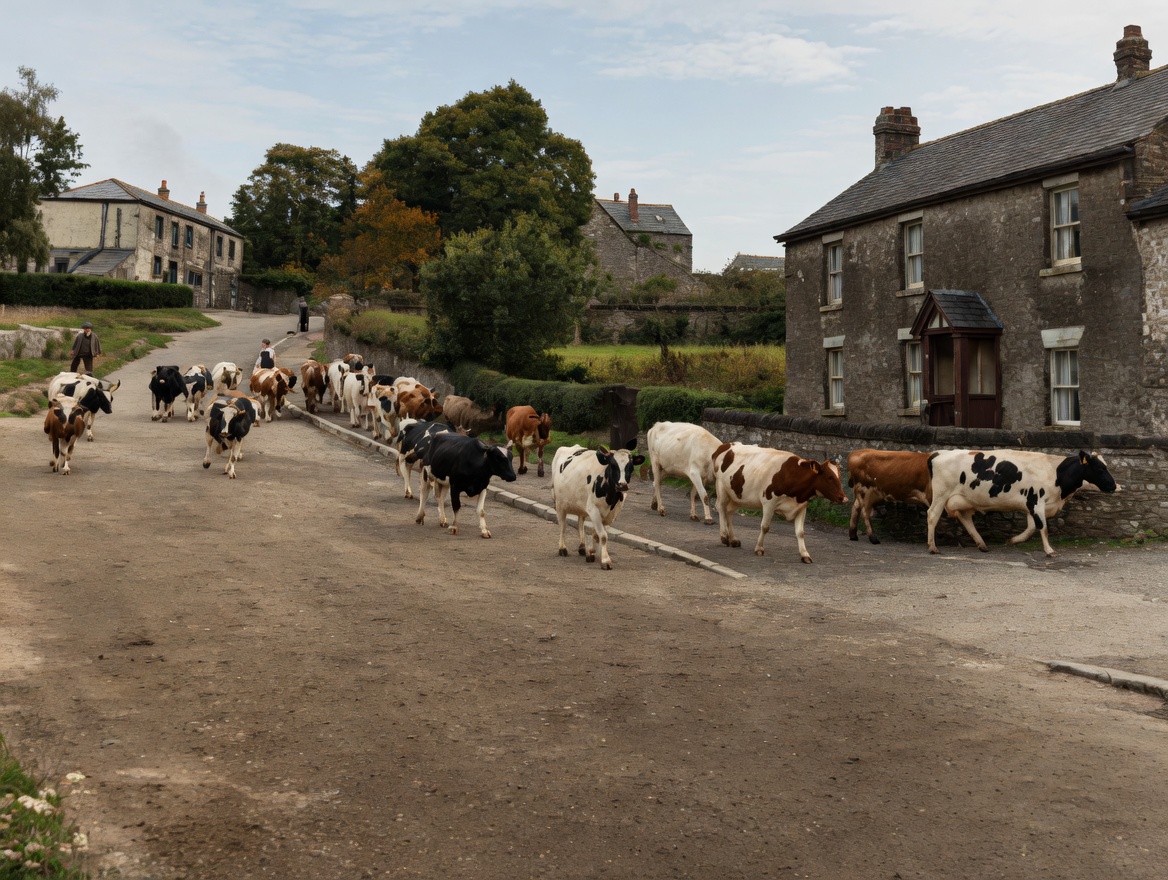
Nine photographs across a hundred years — each in its original black and white, and restored to colour. Drag to compare the two.
The early photographs were taken in or around the village by photographers whose names, in two of three cases, are now lost — one survives by the maker's stamp on the back. The mid-century photographs of the Crown Inn and Manor Farm Dairy were re-discovered in 2024–25 on a community Facebook group dedicated to old photographs of the Knaresborough area, where former residents and their descendants share what their own families kept. The 1923 group portrait was identified by the Claro Community Archaeology Group; the Joseph Arthur Horner publican plaque was read off the high-resolution scan.
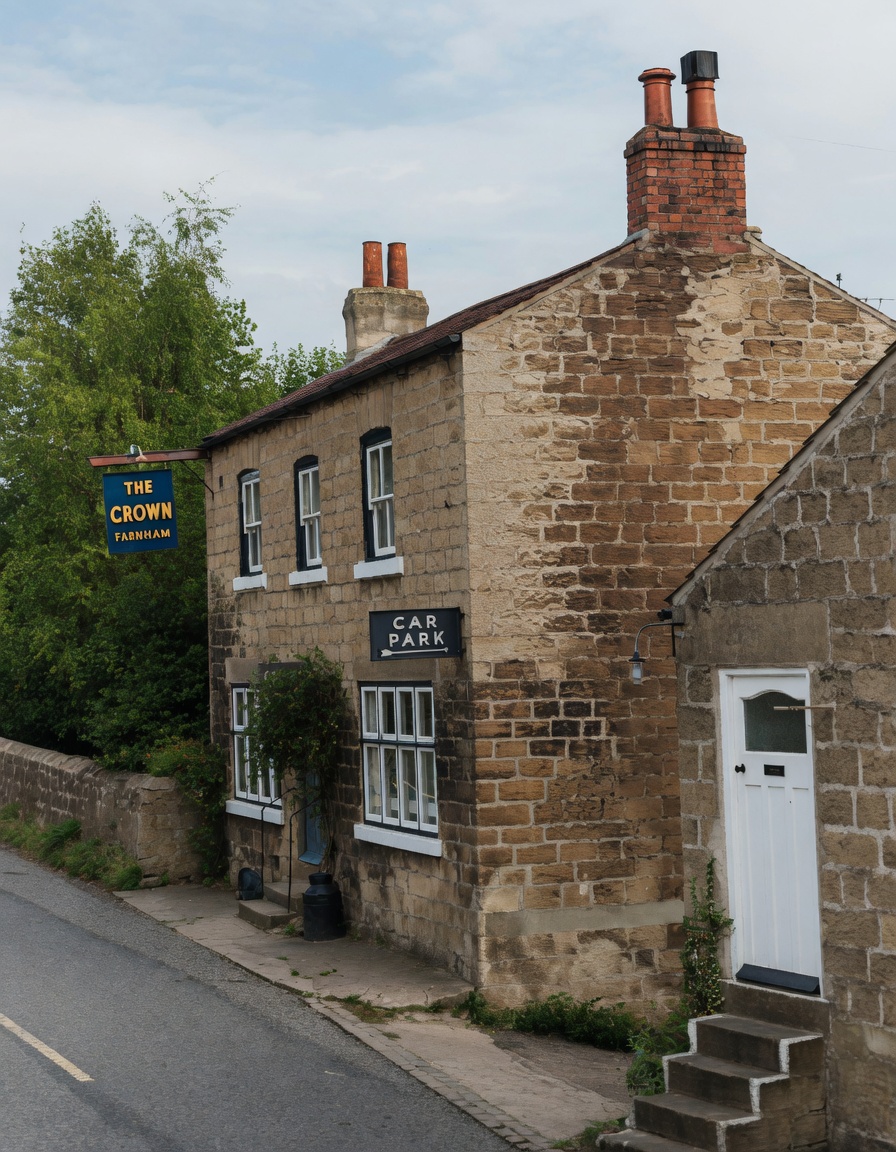
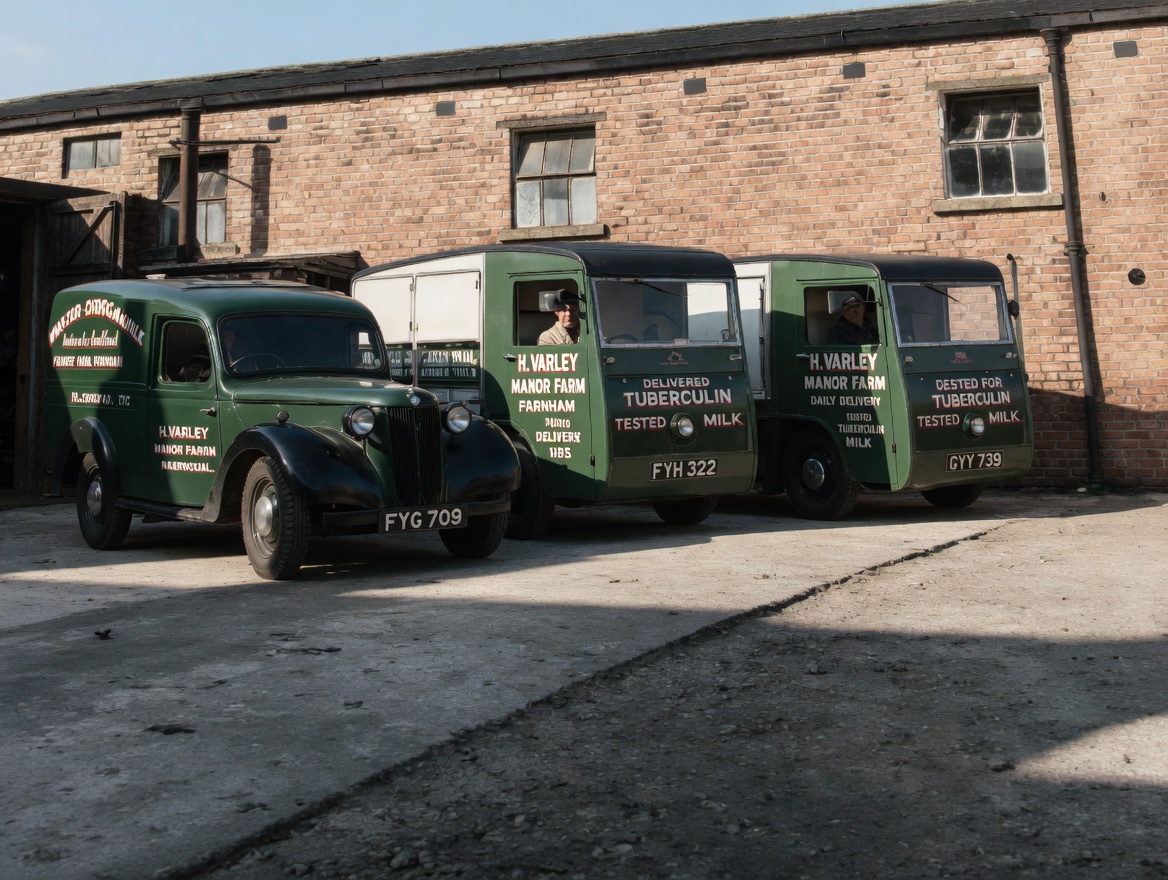
Each photograph below appears twice in the same frame — the original on one side, the colour restoration on the other — with a draggable handle between them. Drag (or use the keyboard arrow keys when focused) to slide the join across the image. The colour is a respectful interpretation, not a recovery of lost information: AI fills in plausible hues from texture and context. Brick reads as brick; grass reads as grass; lettering and signage are approximations and may not perfectly match the original.
Drag the handle on any photograph to compare
Nine photographs of Farnham across the twentieth century — three from its early years, six from the working life of the village in the decades that followed. Restored, brought gently to colour, and paired here with their original black-and-white scans, so the interpretation can be seen against what is actually known. Together they hold the village within living memory.
I
Section OneThree glimpses of Farnham in its early years — a family, a gathering, three small girls in a lane.
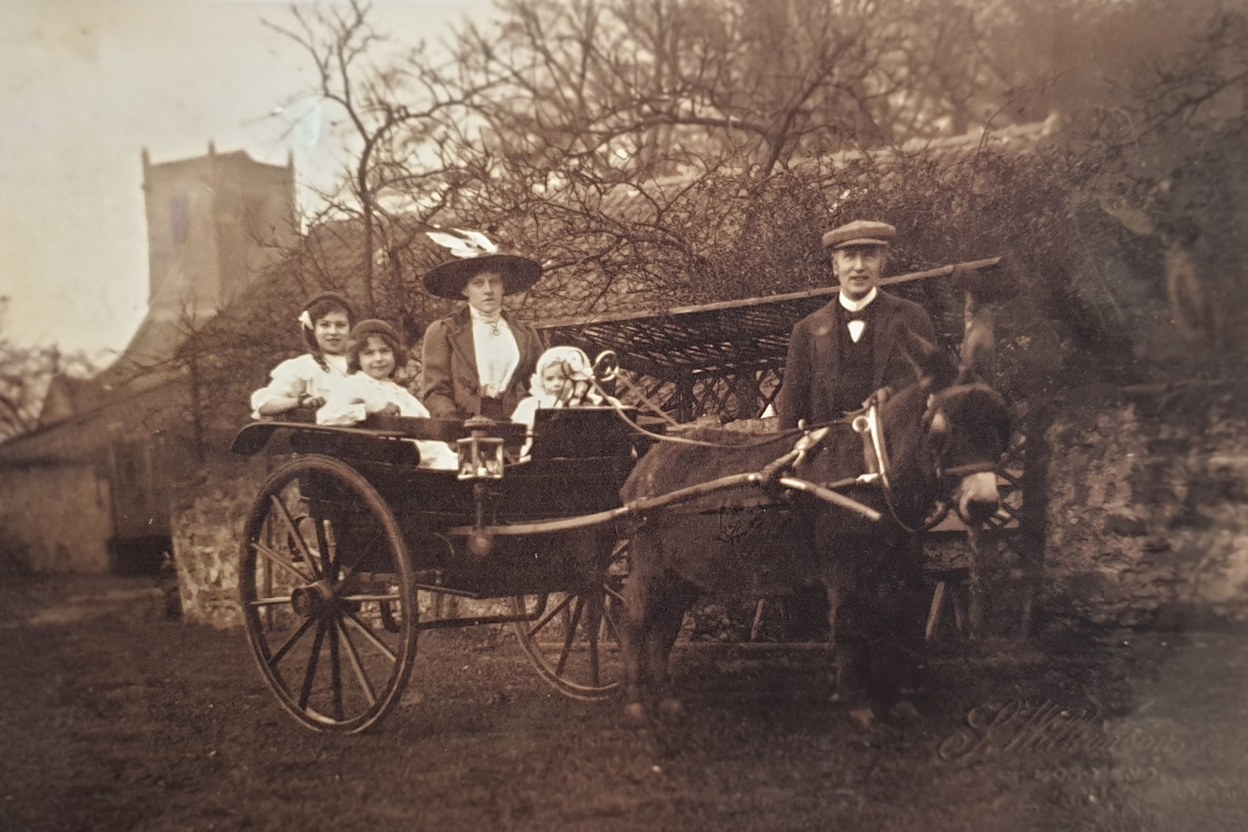
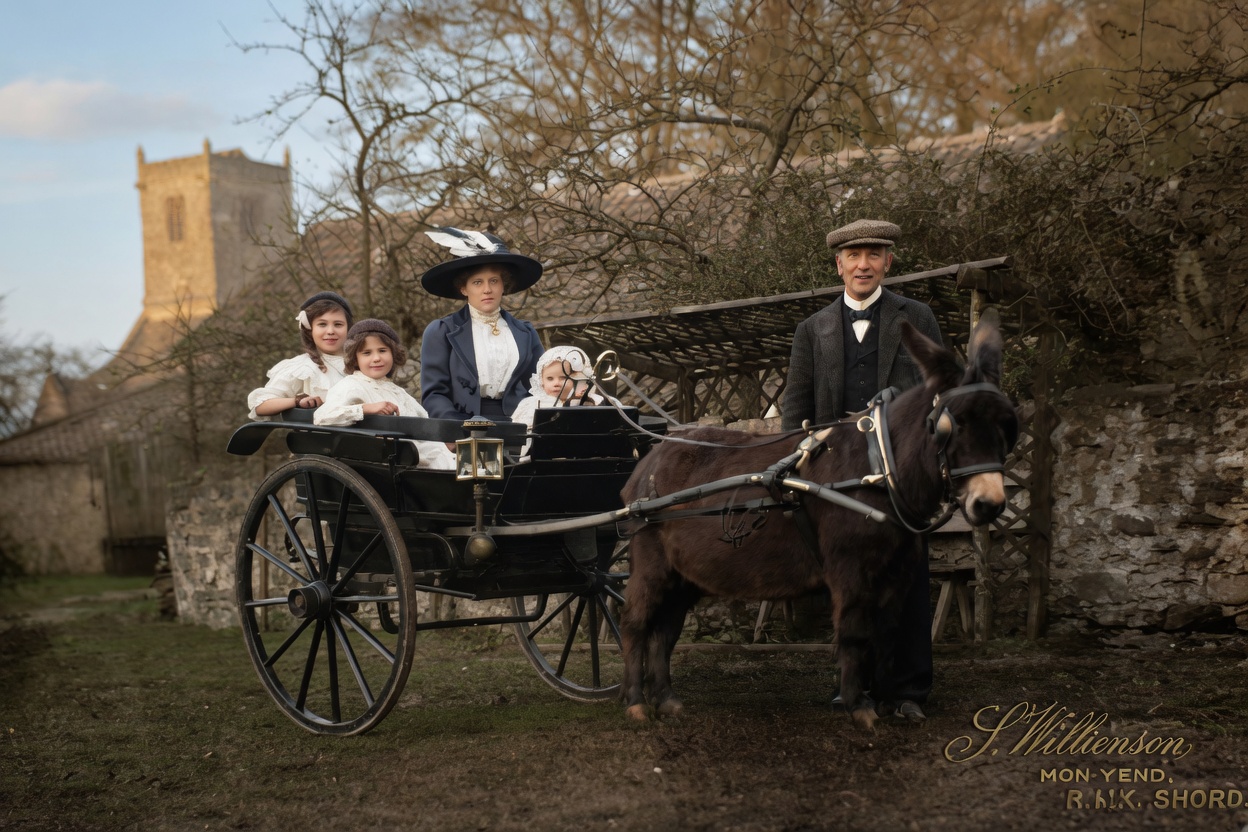
Three children and their mother in a polished trap; their father at the donkey’s head. Behind them, framed by winter branches, the tower of St Oswald’s. The church, the trap, the patched outbuilding and the bramble hedge — all of it still in its proper place a century and a quarter later. The family’s name is not recorded; the photograph survives in the village album by way of its photographer.
S. Willienson · Mon-Yend · R.M.K. Shord
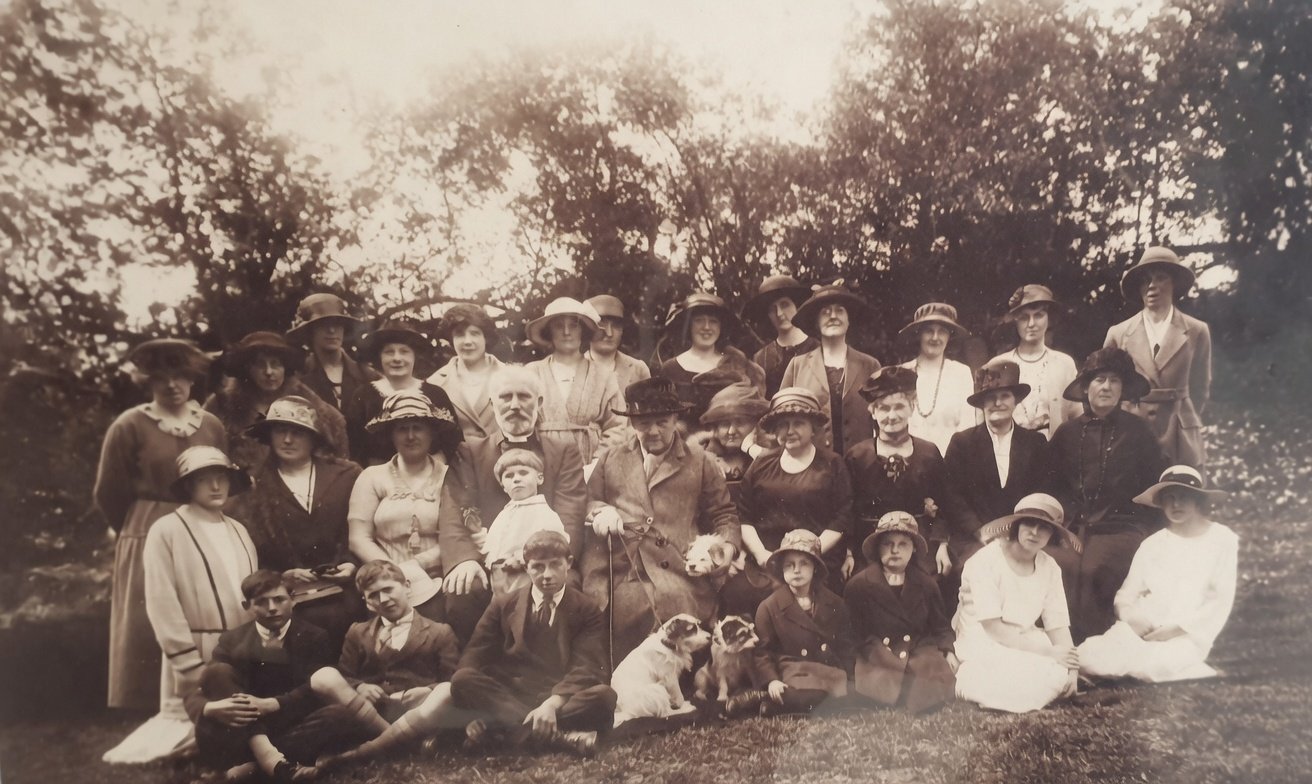
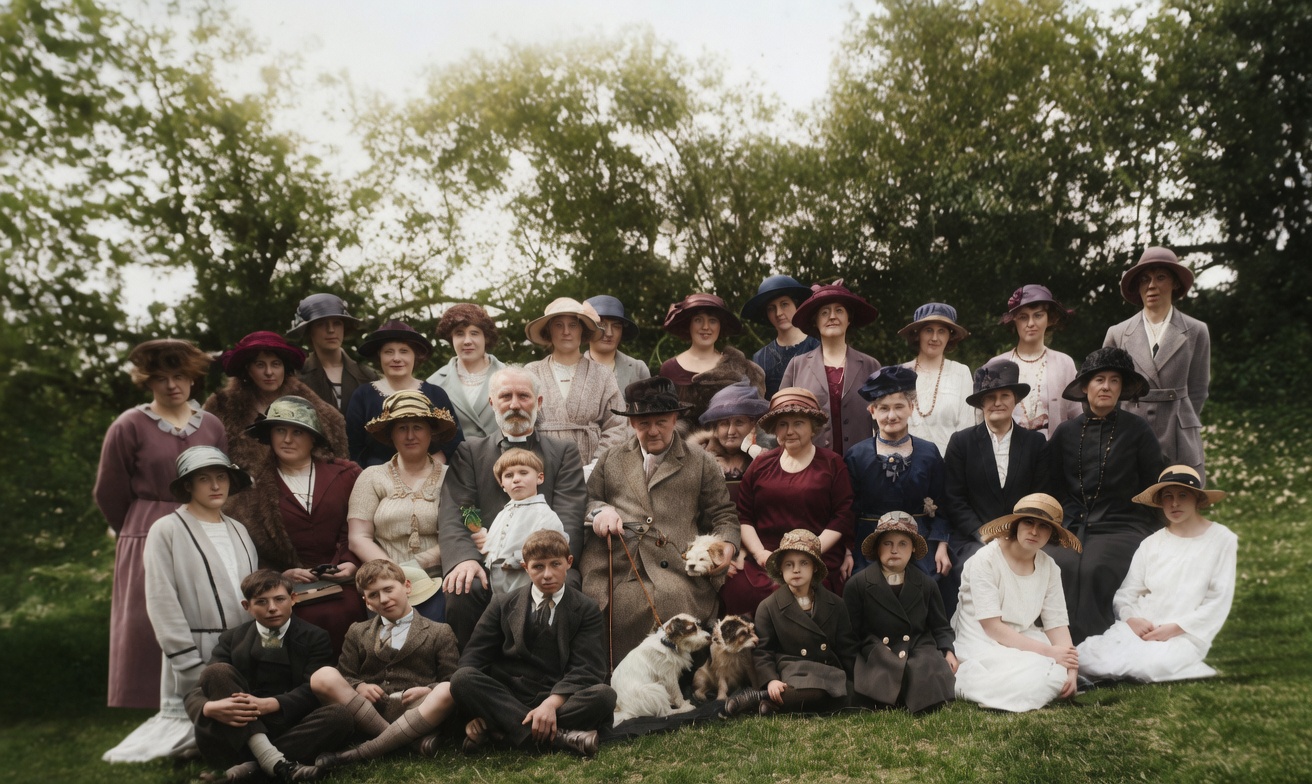
Three generations posed on a Farnham lawn one summer afternoon in 1923. In the middle row sits Mrs Susan Slingsby of Farnham Lodge — mistress of the Slingsby Dower House and widowed mother of Midshipman John A. Slingsby, lost on HMS Formidable in 1915 — with her three dogs at her feet. To her right is the Rev. John Bernard Hall, vicar of Farnham, with his wife and son. The exact occasion is lost — a christening, a Women’s Institute fête, a parish summer gathering — but the company is unmistakable: a tight community photographed in their Sunday best, all known to one another. Identifications by David Hunt in 2019 for the Claro Community Archaeology Group.
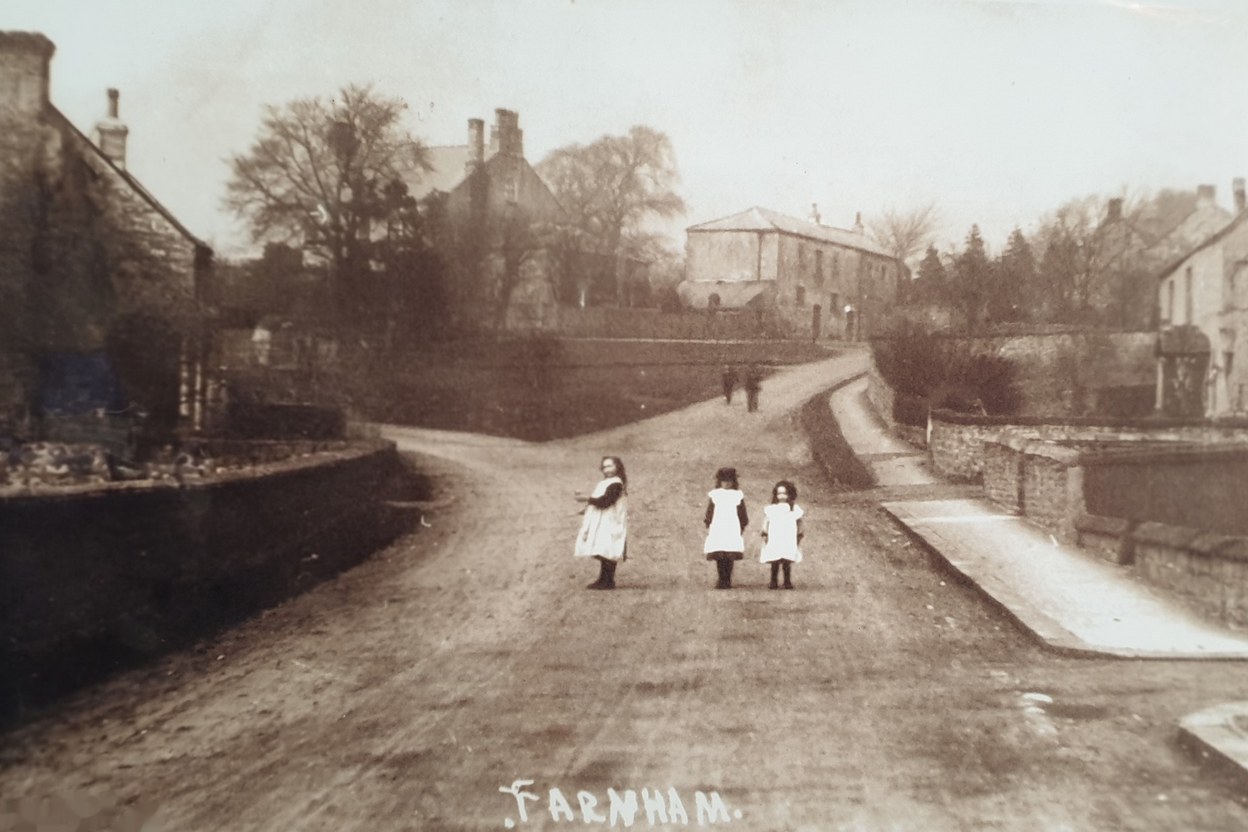
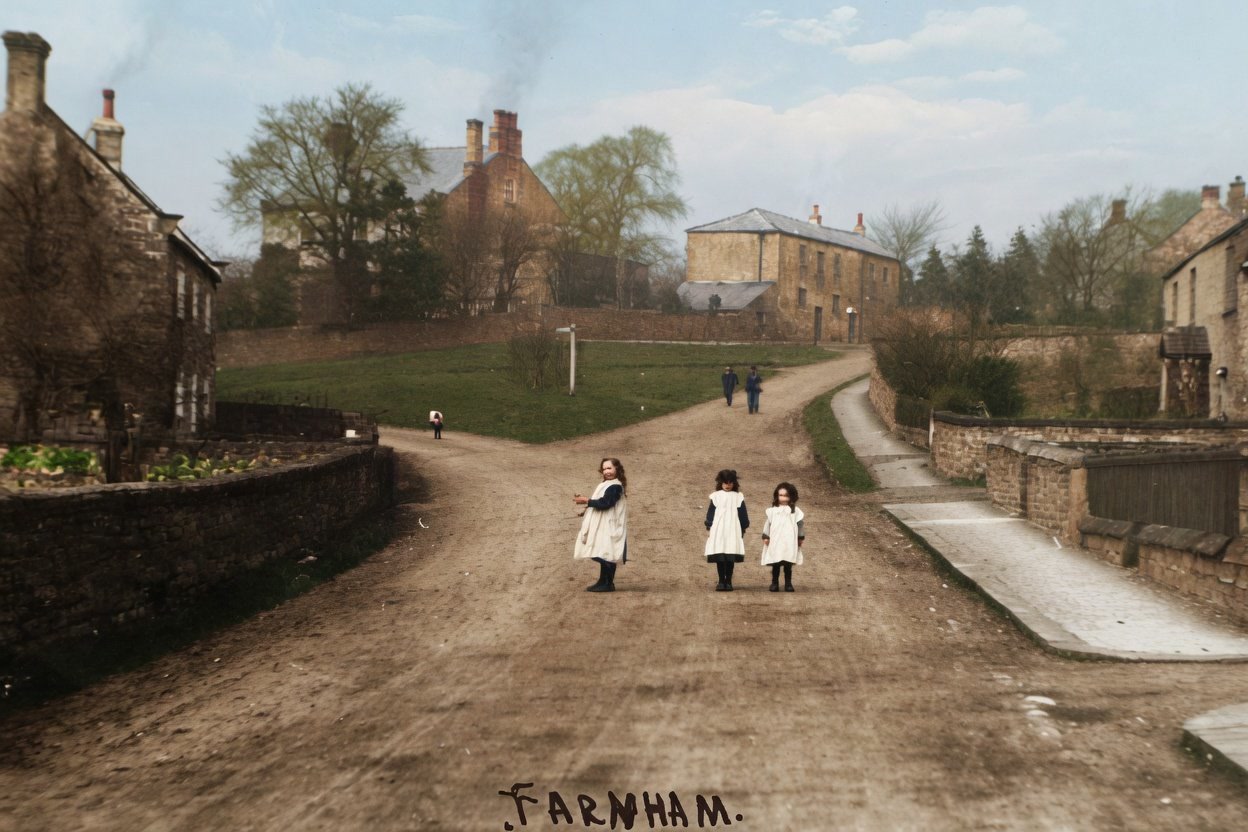
Three small girls in white pinafores at the meeting of the village lanes, looking back at the photographer. Two figures walk away up the hill. The cottage on the left, the farm range on the right, the dry dust of the road — almost every element survives into the present, recognisable in stone and proportion. The handwritten “Farnham” at the foot is the photographer’s own.
II
Section TwoSix photographs of mid-twentieth-century working Farnham — the village pub under its long-serving licensee, and the dairy that kept the village in milk.
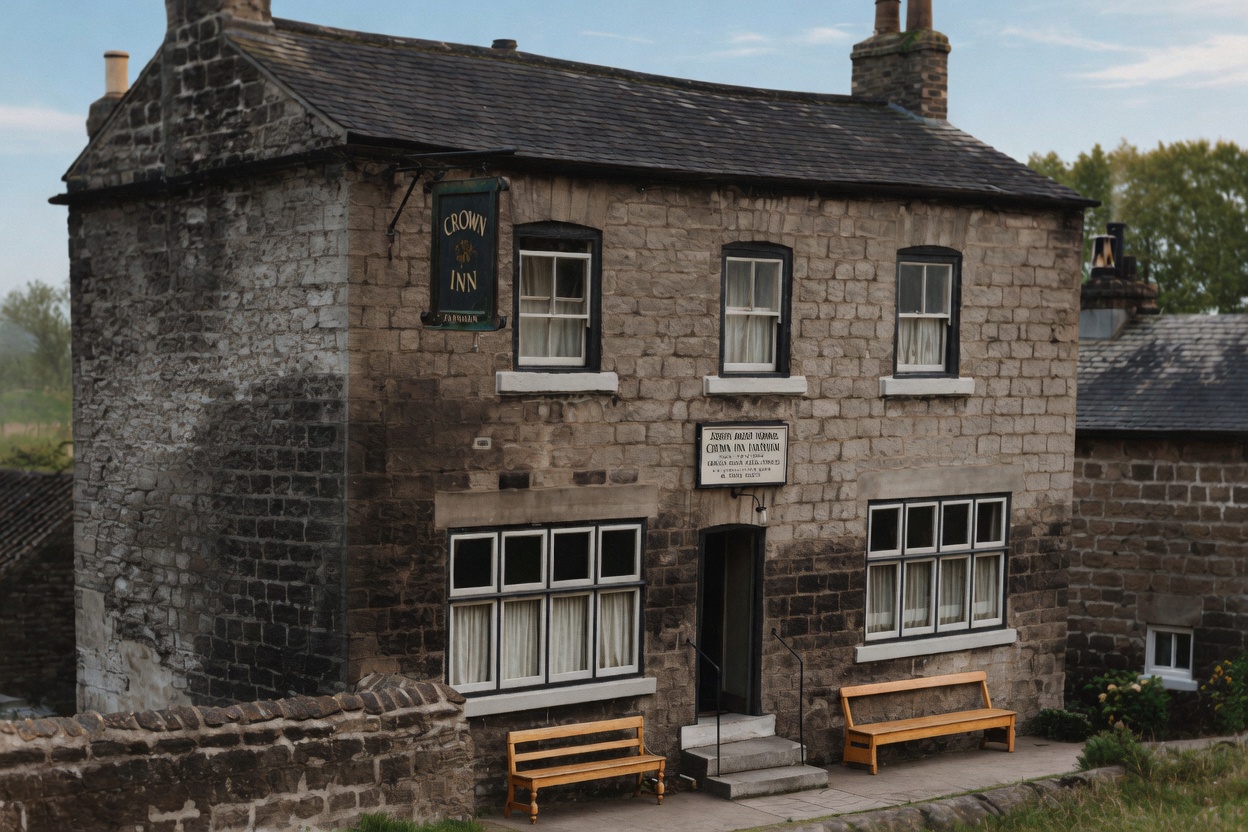
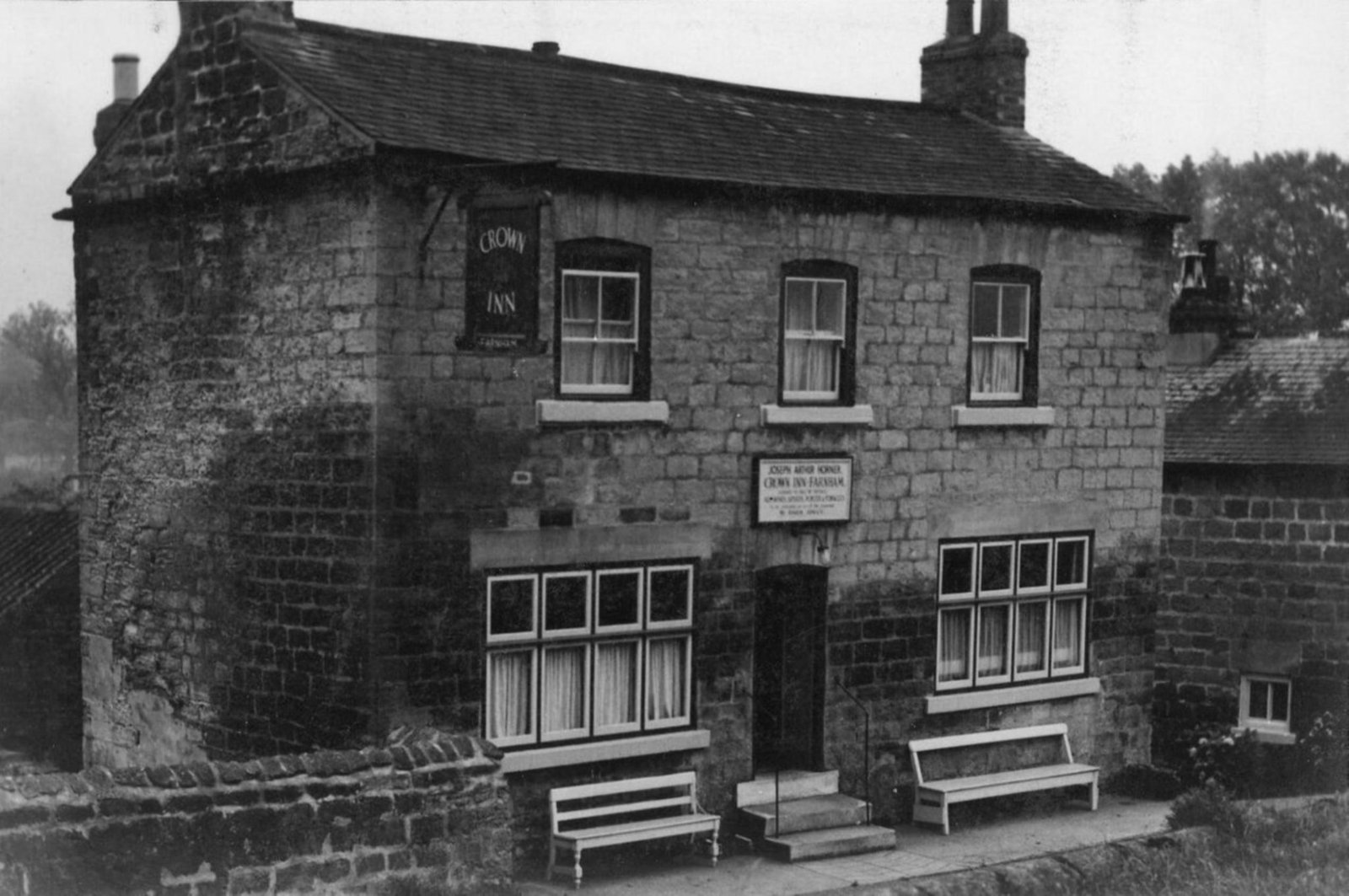
The Crown Inn under Joseph Arthur Horner, photographed on a still afternoon in the 1940s. The licensee’s plaque above the door is clearly legible in the original scan — “Joseph Arthur Horner, Crown Inn, Farnham” — extending Bridger’s 1996 published list of publicans which ends at Edward Russett, 1936. Two wooden benches sit empty beneath the windows; the hanging Crown Inn sign rests against the gable. The stone walls, the slate roof and the proportions are unchanged on the building today.
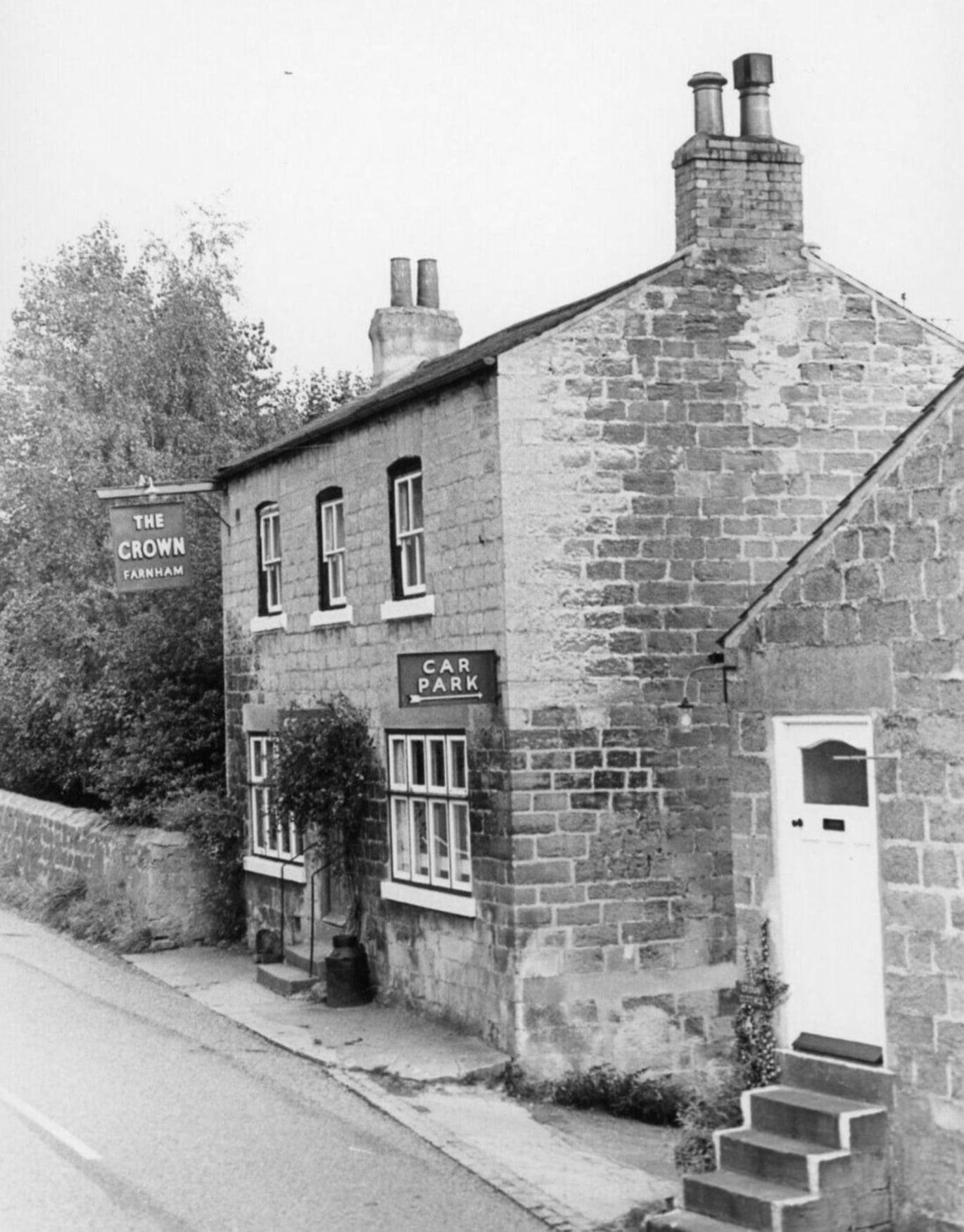
The Crown a generation later — a new hanging sign reads “The Crown, Farnham”, a wooden “Car Park” arrow points the way round the gable, and a creeper climbs the front. Climbing chimneys, dressed stone, slate — all still in place. The Crown closed as a public house in the early twenty-first century and was converted to a private residence.
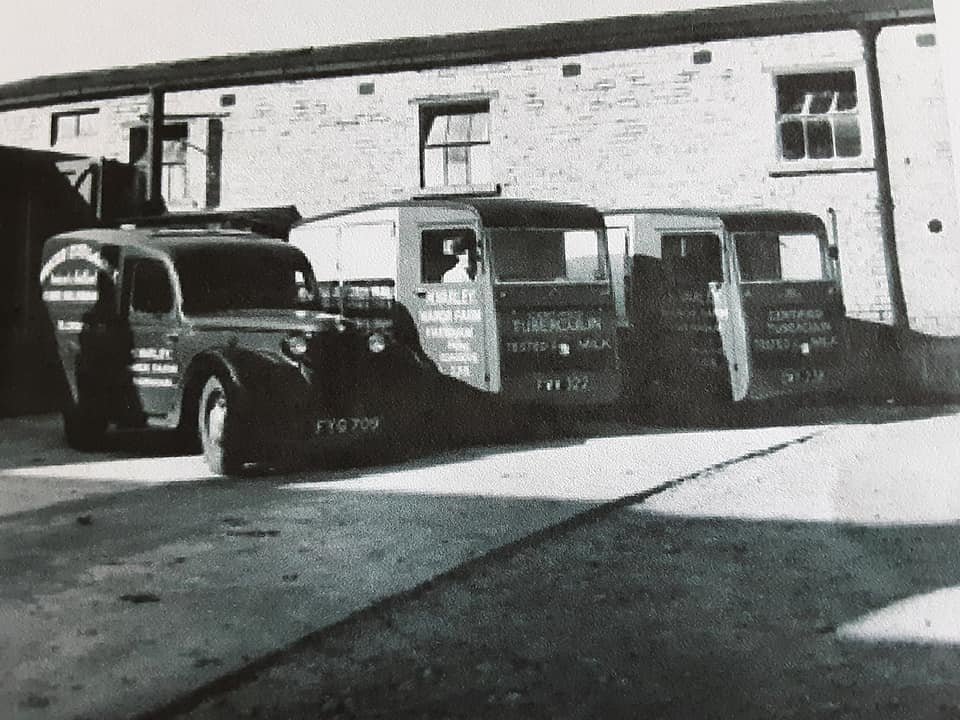
Three of H. Varley’s Manor Farm Dairy vans drawn up outside the brick range — lettered “Tuberculin Tested Milk · Daily Delivery, Farnham.” Tuberculin Tested certification, introduced in the 1930s as the badge of quality milk from clean herds, dates the operation firmly to the mid-twentieth century. Three vehicles, three registrations — FYG 709, FYH 322, GYY 739 — and one farm at the centre of village life.
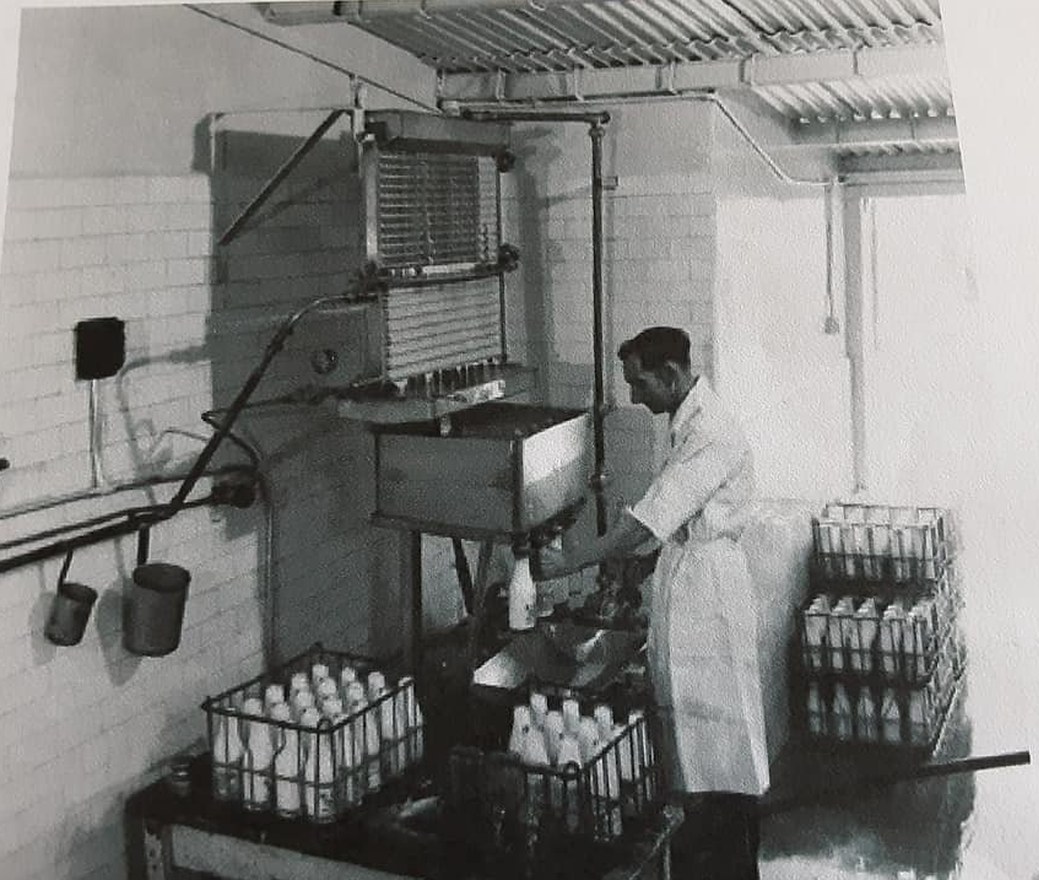
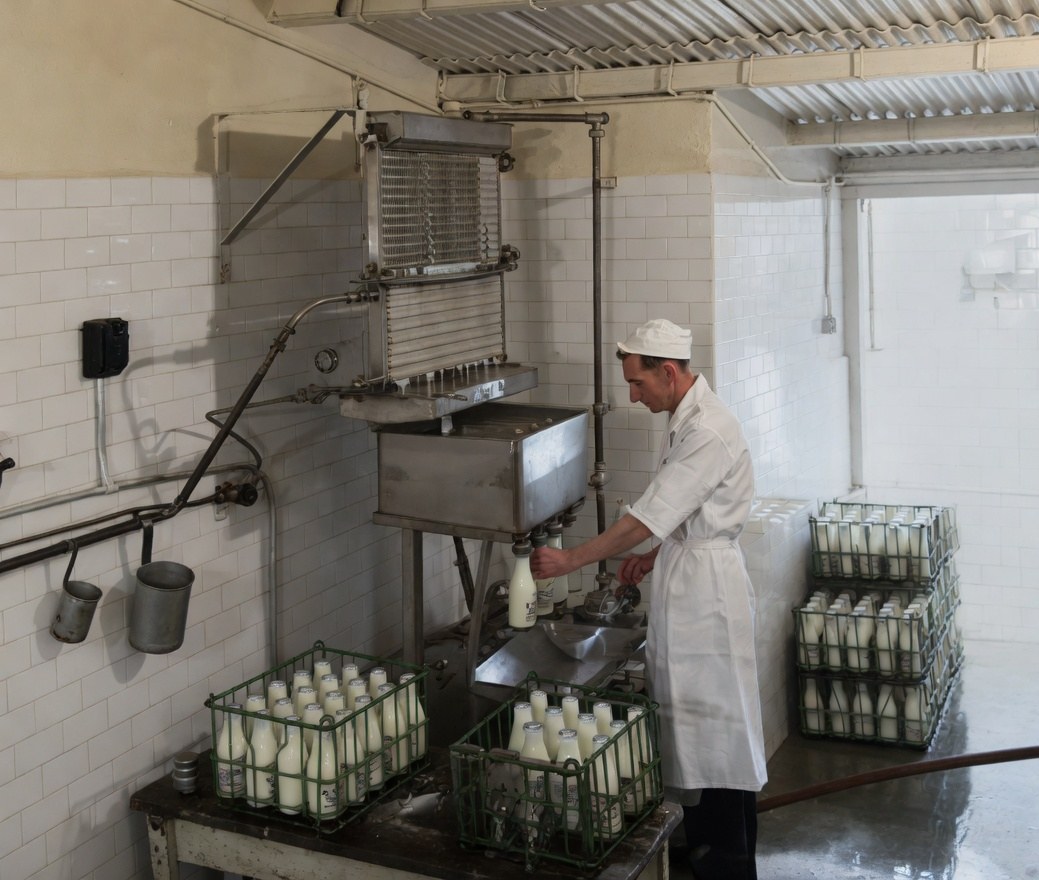
The bottling room at Manor Farm — white-tiled, full of light. A white-coated dairyman feeding empty bottles into the bottling head; crates of full bottles stacked in waiting against the back wall. The whole operation, from cow to bottle to van, fitted within a single corner of the working village.
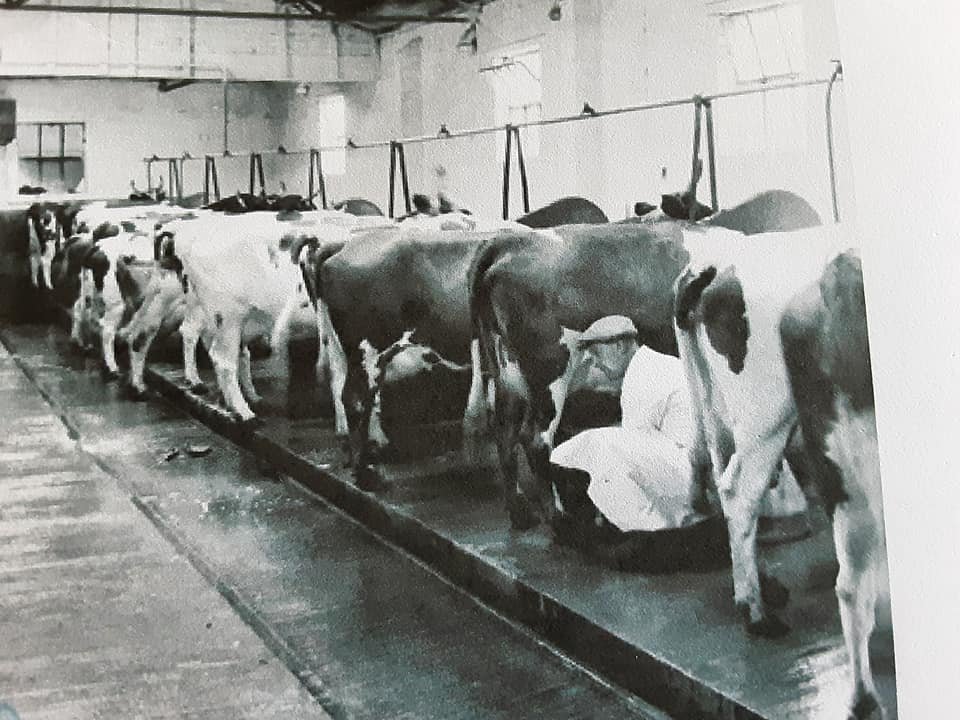
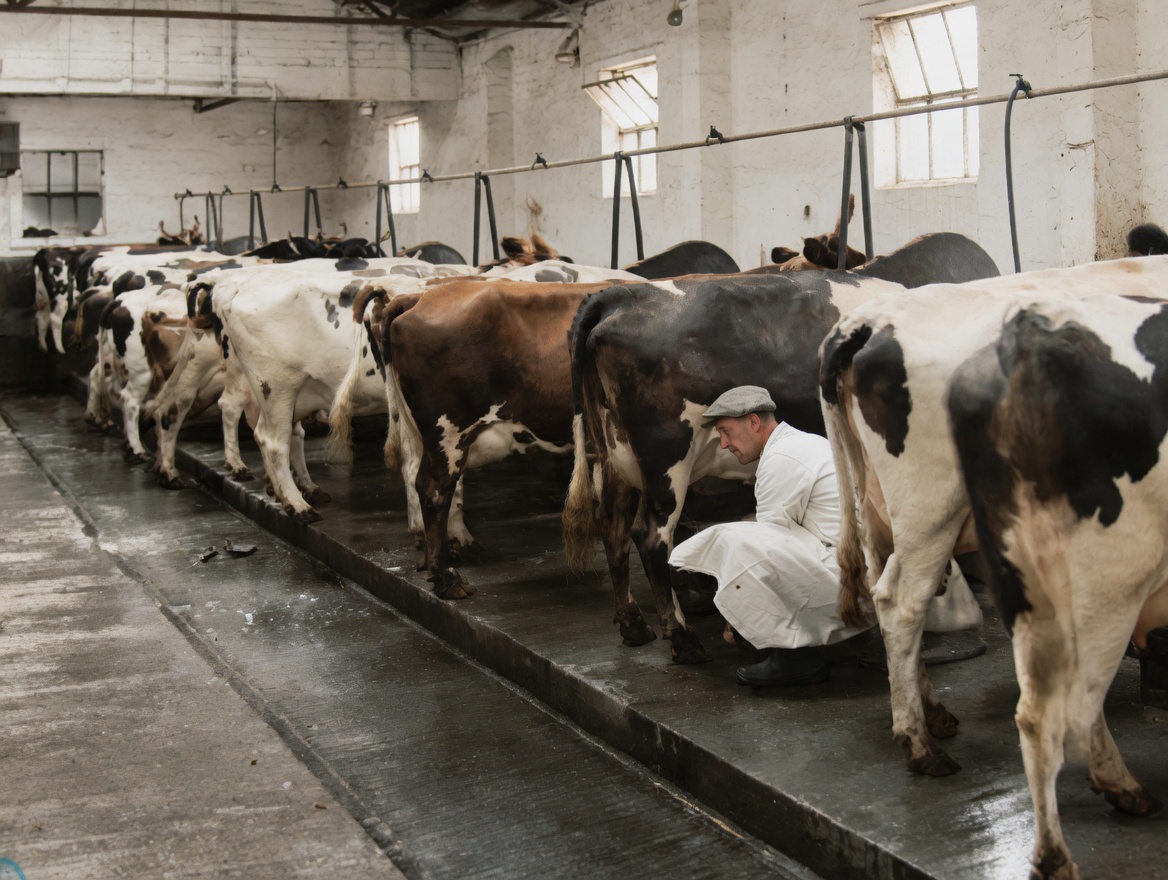
A long row of dairy cows in their stalls along the central passage; the dairyman kneeling between two of them. Whitewashed walls, high windows, the wet concrete floor of a working shed. The building still stands at the heart of Manor Farm; the herd has long since gone.
Twice a day, and most days for decades, the Manor Farm herd was driven down the village street between the stone cottages for milking. A daily rhythm of working Farnham, photographed in mid-century. The cowman walks at the back; the village waits to one side; the cattle know the way.
III
Section ThreeSources. The early photographs — the family with the trap (c. 1905), the village gathering (1923), the three girls in the lane (c. 1900) — are held within the village in private albums; original photographers, where known, are credited beneath each image. The mid-century photographs of the Crown Inn and Manor Farm Dairy (H. Varley’s Tuberculin Tested milk operation — vans, bottling, milking parlour and cattle in the street) were shared via the Old photos and the history of Knaresborough Facebook group.
Identifications. The identifications of Mrs Susan Slingsby of Farnham Lodge and the Rev. John Bernard Hall in the 1923 group portrait were posted by David Hunt to the same Facebook group in 2019, for the Claro Community Archaeology Group’s study of Farnham. The Crown Inn licensee Joseph Arthur Horner is named on the plaque above the door in the c. 1940s photograph — visible only at high resolution — extending Bridger’s published list of publicans, which ends at Edward Russett, 1936.
Method. Each colour version was produced by AI colourisation from the black-and-white original. The colour is a respectful interpretation, not a recovery of lost information: the algorithm fills in plausible hues from texture and context. The buildings, the proportions and the composition are entirely original; the colours are interpretation. Small details of signage and lettering may reflect the limits of automated restoration. The originals are presented here so the interpretation can be checked against what is actually known.
Photographs we may be missing — or that you can correct — are welcome. Please contact the Parish Meeting if you can add to the archive.
Browse the wider collection of village photographs in the Gallery, or read the full written history of the village — Saxon settlement to the present day — on the Heritage page.